Podcast: Webflow's Playbook: Secrets to Nailing Feature Launches — Kevin Wong, Head of Design, Webflow
Insights from Webflow's Head of Design, Kevin Wong: Feature development, design culture, and future plans.

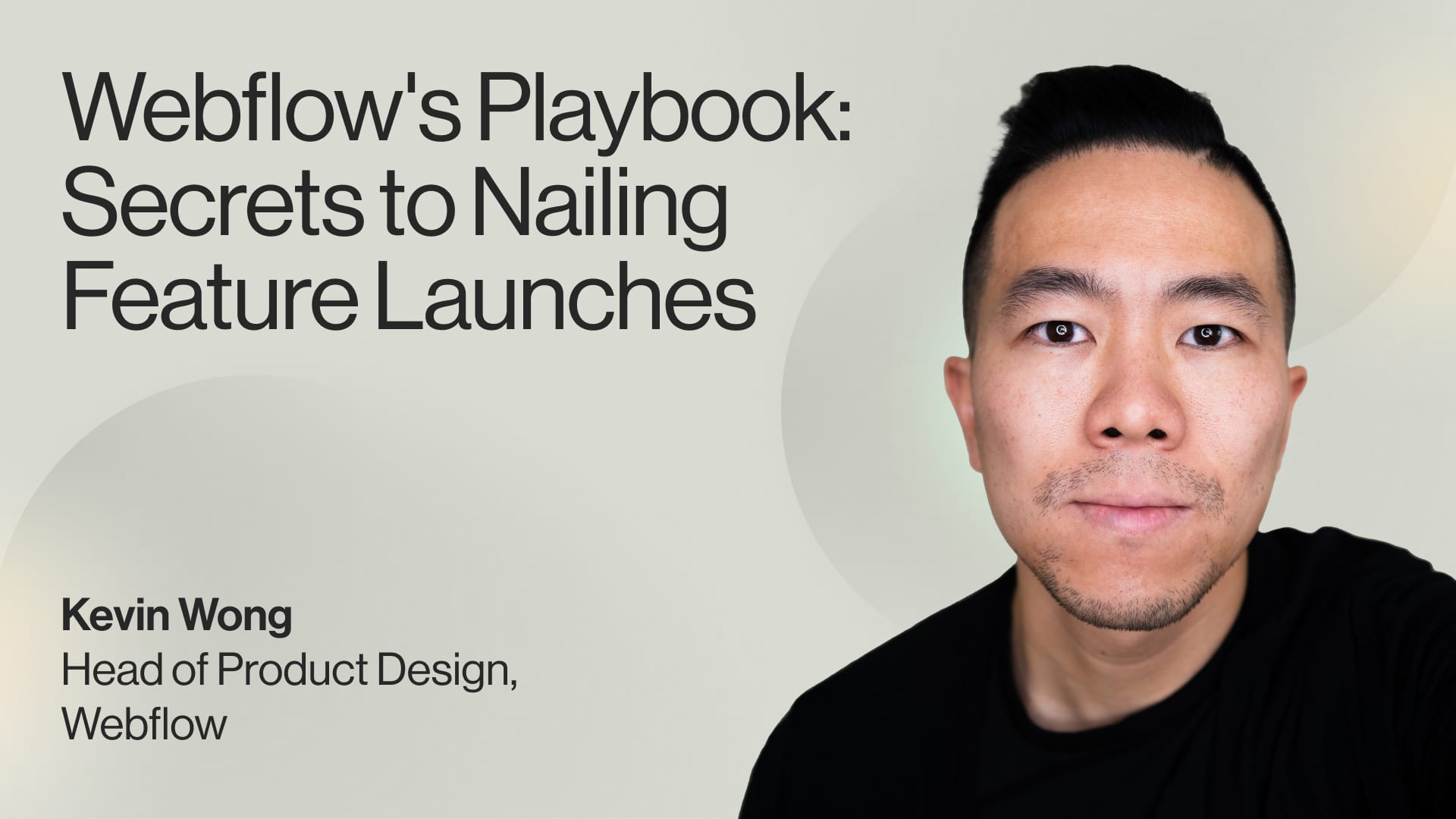
In our conversation, Kevin Wong, Head of Design at Webflow, shared insights into feature development and design processes at the company. He detailed Webflow's annual planning, user research importance, and the balance of top-down and bottoms-up approaches in product development. Kevin also highlighted the challenges of nurturing a design culture remotely and the role of user feedback in iterative design. Additionally, he discussed Webflow's upcoming plans, emphasizing growth and new feature rollouts.
Looking for great Webflow templates. Check out our article:
 Adam Perlis
Sign up for Webflow:


🎧 Listen on Spotify
🔴 Listen on YouTube
👉 Want more content like this? Sign Up for the Academy Resources newsletter where we provide tools, resources, and industry expertise on all things UX to help industry leaders, teams, and talent thrive: https://blog.academyux.com/
👉 Struggling to find the right UX talent? Academy is a product design agency built around flexible resources. Whether you need a studio team, a few resources or want to find a full-time person we are a one stop shop whatever stage you are in. https://academyux.com/
Kevin Wong is Head of Design at Webflow. He started his career as a researcher at Seattle's Artefact (alongside work for Microsoft, Samsung, HP, and Huawei), spent years leading design at Airbnb, and has held design lead roles at multiple early-stage startups. At Webflow he oversees the design organization as part of the company's EPD (engineering/product/design) trio model.
Key Takeaways
- Webflow runs on EPD trios — a three-legged stool of engineering, product, and design that owns a project from start to finish. Kevin credits that structure with maintaining viability, feasibility, and desirability as joint accountabilities rather than hand-offs.
- Annual planning at Webflow is a 'W framework' — an iterative top-down/bottom-up loop that sets company objectives for the year while stress-testing them against what individual teams know from the ground.
- As a remote-first company, Webflow leans heavily on async rituals: rapid design weeks where a new prototype is shared every other day, Loom walkthroughs, Slack threads, and design crits that let distributed teams ship without blocking on sync time.
- Webflow's localization launch was a year-long endeavor — less because of translation management complexity and more because of the underlying architecture work that had to be right before the feature could scale across next year's roadmap.
- The hardest decision on localization wasn't technical — it was scoping. Kevin's team had to decide how much of the translation management workflow Webflow itself should own versus lean into the company's core strength as a visual development platform.
- Kevin's design rituals at Webflow are a mix: design sprints when the team needs to accelerate an idea, workshops with EPD partners for alignment, structured product reviews to apply rigor, and async design crits distributed through Loom and Slack.
- Feature launches at Webflow are judged on whether the right experience was built — not just whether it shipped. The team defers decisions until they know what their visual-development customer actually needs, even when the delay is painful.
- Cross-functional trust at Webflow is maintained by constant communication between design, the design systems team, and the CMS product surface — so changes land in sync, not as surprises.
Frequently Asked Questions
› Who is Kevin Wong and what does he do at Webflow?
Kevin Wong is Head of Design at Webflow, where he leads the company's design organization and partners closely with engineering and product as part of Webflow's EPD trio model. Kevin began his career as a researcher at Artefact in Seattle, then moved to a series of in-house roles including leading design at Airbnb before joining Webflow.
› How does Webflow plan its annual roadmap?
Webflow uses a 'W framework' — an iterative process between setting company objectives for the next year, mapping those back to a two-year vision, and then working through the middle with both top-down and bottom-up input. Kevin says it's a big iterative loop meant to keep both strategic clarity and team-level realism in the plan.
› How are Webflow design teams structured?
In EPD trios — engineering, product, and design as a three-legged stool. Kevin strongly believes in this structure and says Webflow has 'found time and time again that having all three functional members together on a project from start to finish is so critical.' The trio owns viability, feasibility, and desirability as joint concerns.
› How does Webflow run design reviews as a remote-first company?
Async. Webflow uses rapid design weeks where prototypes are shared every other day, Loom walkthroughs for context, Slack threads for written feedback, and design crits that don't require everyone on the same call. Kevin frames this as a necessity for remote distribution and as a way to give broader visibility into large initiatives.
› How long did Webflow's localization feature take to build?
About a year. Kevin says most of the time went into the technical architecture and scaling work that would let the feature expand into the next year's roadmap, not into shipping the initial surface. Localization also raised a tricky scoping question: how much of the translation management workflow should Webflow own itself versus lean into being a visual development platform?
› What design rituals does Webflow use?
A combination of design sprints (to rapidly develop ideas), workshops with engineering and product partners, product reviews for cross-team alignment and rigor, and async design crits via Loom and Slack. Kevin describes them as tools for both alignment and idea-strengthening — getting feedback that makes the design better, not just approved.
› How does Webflow's design systems team collaborate with the rest of design?
Through constant communication, because changes to design system primitives have to land in sync with changes to the product surfaces that use them — especially inside the CMS. Kevin emphasizes having regular reviews and workshop slots specifically to align on implementation paths before anyone starts coding.
› What did Kevin Wong do before Webflow?
He started as a researcher at Artefact, a Seattle boutique design firm similar to IDEO or frog, where he developed insights and interaction prototypes for Fortune 500 clients including Microsoft, Samsung, HP, and Huawei. From there he moved in-house: a series-B startup as UX lead, then early at a smaller startup as employee number four, then several years at Airbnb before joining Webflow.
Full Transcript
› Read the full conversation transcript
but generally you know when we try to plan our work we have our annual planning where it's a big iterative process between setting our company objectives you know where do we want to be a year from now how does that get us to where we want to be a couple years from now and then working in sort of a w framework in order to make sure that we're operating both at like top level top down as well as Bottoms Up approach hey everybody and welcome to how we scaled it for design teams the show that explores the arduous journey of growing a successful design practice from 0 to one I'm your host Adam FIS the CEO and founder of Academy ux Staffing and recruiting agency and today we're going to be talking to Kevin Wall the head of design at webflow we're going to be discussing a lot of different things including how to launch features and what it's like to do that at webflow so stay tuned for that but before you do if you could please like And subscribe to our YouTube and Spotify channels it would really mean a lot but without further Ado here's our conversation with Kevin Wall awesome thank you Adam really excited to be here and to talk to you about how things work at webflow awesome thanks for thanks for being here so Kevin to give the audience a little bit of context could you kind of tell a little bit about your background and what you're up to now yeah of course so you know going back a little bit about my own career journey and history I actually started out as a researcher at a local Seattle Boutique design firm called artifact and you know the design firm was really similar to like Ideo and frog or method and my job was really to develop insights and interaction prototypes for a lot of Fortune 500 companies you know think about Microsoft Samsung healea Packard and Huawei it was a great opportunity and experience to get a wide range of you know look at design problems from different Industries like healthcare Enterprise sales and fintech and social and mobile Computing and then you know from that point I got really excited about what it meant to be in-house and so I had moved to San Francisco and joined a series B startup to be a ux lead where I worked on a commenting platform and social media content aggregation company and worked on some SAS tooling and products and grew to lead the design team there since then I had joined a small startup and tried that out as employee number four and then most more recently had joined you know Airbnb for a number of years leading the host part of the host team as well as our Global support products team where we were thinking a lot about the end to-end support Journey for guests and hosts and I really love that experience because it was a chance to not only do product design but also some service design and lead some pretty big Transformations to really redesign our policies programs and product UI and then after that I had a short stint at messenger in meta where I worked on remote presence this was really interesting time period because you know during covid we were experiencing a lot of shelter in place where I worked on a lot of the real-time communication tools for all the family products so think about like Instagram WhatsApp Facebook and ocul and then finally it kind of leads us up to today where I'm now leading product design for webflow and this includes all of the product and content design work Design Systems and working really closely with our engineering and product leads and so here we're just trying to help people bring super bring web development superpowers to everybody and we really want to help folks build their websites whether it's up incoming startups or Global Brands so it's only been a year and a half and I'm just living at so far that's that's awesome wow you have an incredibly impressive background it's so nice to hear about your journey to this point and you know I think the focus of our conversation today I'd love to talk a little bit about feature launches you know web fo is pretty known for doing some pretty Epic feature launches and I think generally they're really well received they're really well thought out well marketed as well and you know the community is very big part of you know how these features get developed I'd love to hear a little bit more about like the discovery process how do you go about figuring out what features to build next also like how do you figure out like what are the things that may be broken in your platform today that you're like oh maybe that wasn't the right approach we should try something else yeah I'd love to start there yeah there's so much there and you know I know every company has their own way of doing it and so webflow you know I think just in terms of how we figure out like what's on the road map and how do we plan the work that we have ahead of ourselves and it's kind of apple time because we are in annual planning season so shout out to all companies and teams out there who are just in the thick of it but you know I think there's generally like three buckets of work that typically happen so there's planned work which we try to do you know around typical rhythms of the business there's emergent work you know that's kind of based on like our learnings as we make progress on projects and initiatives and then there's the unplanned work stuff that you know Catches Us by surprise or just happens to be an incident or are things that are like Bottoms Up and teams get really excited they see an opportunity and we find ways to make it onto the road map but generally you know when we try to plan our work we have our annual planning where it's a big iterative process between setting our company objectives you know where do we want to be a year from now how does that get us to where we want to be a couple years from now and then working in sort of a w framework in order to make sure that we're operating both at like top level top down as well as Bottoms Up approach so the W framework is essentially we have Executives and Senior leadership set some highle company goals you know where do we want to be financially or where do we want to be with satisfaction and then taking that General guidance teams are then going to work within their own pods or pillars to come up with a plan to say here's how we think we can drive impact and that may be informed by some of the discovery work through user research or data science or just prior insights that we've had just by working in the problem space for a long time and then using this as an opportunity to say hey now is the right time for us to prioritize it and make you know inroads into launching either a product or iterating on some features that goes back up to you know senior Executive review we tried to use that first touch point to really Drive alignment you know like where are those dependencies between different teams do are we touching the same surface and should we be thinking you know more holistically so that we aren't say shipping the or chart and then and given that feedback we'll do another rev at the team level to really fine-tune the plans also think a lot more about you know resourcing Staffing and general sequencing of the work and then that goes into one last review before we lock things in and then U you know just start going Off to the Races so that's like setting the plan for the year and then of course everything after that like is bound to change probably the next you know couple of months but you know we try our best at least have that moment to align and you know reenter ourselves yeah and I'd imagine I mean the way you describe it sounds like there are a lot of different groups involved there's senior leadership I'd imagine there's a product management user research you know also maybe even customer support and maybe some other groups I'm not even thinking about but I guess your design team and how do you like collect all there's a lot of information there you know like Millions probably of customer support tickets you know hundreds of maybe user interviews you know stakeholders and Leadership you know having their own POV of where the product should go all these things need to kind of be synthesized and Consolidated down and prioritized how do you get there yeah it's it's a lot of information and you know it's that richness it's both like it's wonderful because you have so much input and ways to inform your thinking but yeah it's a lot of work to be able to distill that into something that feels actionable and concise and memorable because you want people to also understand where we're going and share that Vision as a company you we have a lot of different sources like we have our wish list you know this is a place where the community submits ideas and they're able to upvote it so that's one source of input for us to help identify those opportunities another is doing the research itself so we may have prior to like annual planning a sneaky suspicion about what big problems we want to be solving and what we think is going to really move the needle for us and so the research team may start to do some of that groundwork to understand and do the discovery and we have a great user research organization that's both sort of a combination of user research and what we call decision science which is another way of saying data science so these combined give us a really rich qualitative and quantitative perspective and then you know I think there's like prior work that you know we have ideas about you know in previous years that we just weren't able to prioritize and so we want to you know move that forward and so I think that in terms of like how do we even prioritize that like how do we even set those strategic objectives you know I think it is a series of conversations with senior leaders to understand you know overall like what is the biggest impact that we can have both in terms of the like satisfaction and Adoption of web flow as well as I think asking yourselves like which customers are we trying to also prioritize how much of the needs are coming from those who are in the agency background or and running their like Studios and freelance businesses or how much of this is more focus on like teams where they need more support for like collaboration and even things like better user rules and permissions and so I think we are able to apply some degree of Financial forecasting to say here's how much value there is and then looking at it sort of holistically to say okay what's the composition of all of these different product opportunities and what's sort of the right level investment that we think we can make in order to you know land something really great at the level of you know execution that we think is important too for this year or maybe next year so it's Al it's very iterative it does require a bit of you know clear storytelling from the top to say you know here's what we're trying to achieve and then also listening to our teams on the ground to say you know this is how much time it's going to you know take to work or here's an opportunity that we may need to also consider in order to fit within that overall narrative yeah it's it's definitely a balancing act it sounds like of you know kind of measuring those business goals with the user goals and also like just team capacity you know like you guys are only so big and you can only do so much work in a year you know how do we how do we get to that next feature launch where you're not overwhelmed or the team doesn't need to grow tremendously to be able to you know and not lose focus at the same time so that's got to be done organically Al and so I had a question though I want before we like kind of move on to team growth because I think that's part of this I had a question about like who's kind of responsible for synthesizing all this I mean is it a combination of people is there somebody who's like solely in charge of this I mean is it like the head of product is it the head of research maybe it's you the head of design how do you like really solidify like where you land on this yeah so I think that the plan that we are trying to align on and say here's what we're going to do and here's what it's going to take is a combined effort between myself our head of product and our head of engineering and so we worked together with our team leaders to say okay let's bring everything together let's pull it all into a single narrative and talk about you know what what the goals are and reiterating that like we have the shared sense of the of the outcomes here are the projects that we're going to invest in here's the level of investment and then here's you know the outcome or what you can expect some of the additional like details that help us communicate what that plan is can come from different functions so from design perspective what really helps us is having either a set of prototypes or design mocks that help really visualize what the experience is that we are trying to achieve these are all very gestural you know early on somewhat fuzzy sometimes we can be a little bit more concrete depending on how ambiguous the problems space but we want to introduce these visuals in order to help anchor people on you know a potential future that we are trying to strive for that's interesting so you guys almost treat it like a almost like an agency pitch where you're like hey like we have this General broad idea of a few different things we're thinking about you know here's like high level like kind of how that could look like very rough doesn't have to be a rough sketch but it could be high fality something to kind of demonstrate it and then that will spark conversation that could lead to it maybe getting prioritized or deprioritized yeah absolutely and you know I think the it's interesting like we want to be as informed as possible Right like everyone has their own ways of being more you know Eyes Wide Open to the situation because we are like you said making trade-off conversations like you know how much can we really invest and what do we get for that investment of like time and energy and you know whether it's like here's a impact anal analysis that's more data oriented or you know here's a text spec or technical Spike that shows you know sort of an architecture diagram I think all of these kind of play a role because I think every person in the room may have a different question because they see you know different you know like headwinds or Tailwinds that we should be thinking about so we yeah we are trying to be as rigorous as possible and I think Design's contributions are helping see things from the users persp perspective right like we want to empathize and model the end user experience so that you know I think the analogy is when you say like you're talking to your friend or partner you're like I want a dog and they're like oh yeah that sounds like a great idea and you're like well you know do we have the same picture of what that dog is do we have the same vision of like how our lives would change once we have a dog who's taking care of it are they big small you know I so I think these you know these artifacts are really valuable because we can avoid some of the pitfalls that happens later on when you get into execution and they say hey that's not what we talked about and you know that's where we get in trouble and you know things slow down or you know we ship something that actually isn't what we wanted right and along those lines you know once you've decided on you know a plan of action like hey you know the or not a plan of action but like the features that you plan on launching you know a particular time period what does that plan of action actually look like you know like and how do you how do you start implementing what are the first steps yeah so I think it involves having a really strong product brief these briefs are documents and we have somewhat of a of a written document culture that allows us to try to you know be concise and concrete about you know the really important you know talking points or like you know parts of the strategy so like clear articulation of the problem who are we solving for what is the value how do we measure that and then what is the you know series of Milestones that will help us understand we're we're making progress towards that goal I think with that can be an accompaniment of like a figma file which may be you know those prototypes it may include technical documentation from a tech bike and then from that point there is a more of like a execution plan so we use you know different types of like swim Lane kind of tools that help us track like who's working on what how much time we want to spend you know from ideation to design there's definitely going to be like some component of research in there to help us you know evaluate the success of a design you know from a comprehension or usability standpoint and then when we plan to either do a beta or some when we plan to do a GA launch the and then I think from that point we also you know review with our go to market team and so go to market includes things like our marketing team sales community support and we want to make sure that we build in time and have those alignment meetings to make sure how we talk about the products and features to users and in the community make sense and would resonate also any Readiness and training that would help sales and Community Support ensure that once this thing once this product lives or once the feature lives you know they're prepared for you know that customer interaction whenever that happens that's great and how did like the teams get organiz like do you have a design Ops team that you work with that helps kind of resource manage and assign you know quantity of people to a particular project or particular types of resources to a project how does all that work yeah so we it's a it's a combination of the managers and an operations team so we do have a couple product operations managers who are fantastic so glad we have them so if are listening so much love and appreciation we also have a design operations manager role that we just filled so we're really excited to have this person join next year by and large it's been like managers who are understanding the resourcing and timing and making sure the work is both allocated as well as we're alighting on you know the timing of when we want to achieve Milestones for those really comple Lex initiatives that may involve multiple teams because there's like a shared surface then operation managers become really important to help communicate and organize that coordination so for example when we were doing our localization work we had four work streams that were happening almost simultaneously and it was really important that we would have both communication happening with leadership because it was a top priority but also with other teams because we were working within our CMS tool our designer The Design Systems team and so having just that constant communication to ensure everyone was aware of what changes were happening that any times that needed to do reviews or you know get together to Workshop ideas to make sure we were aligned on an implementation path that would happen and would happen in a timely way that's really cool and like when you guys do the actual work and get to the execution part of it you know do you guys work in a particular model like you know of course they you know design Sprints were very popular for a little while there are various versions of that I think have taken shape you know multidisiplinary teams Etc like how does that process work at webflow yeah and I think it's a good question so we do some combination of design Sprints and workshopping with our partners and when I say Partners I say our engineering and product internally we call ourselves the epd organization so this represents you know the technical team that's responsible for building products and features and for us we strongly believe in this Trio or three-legged stool if you will we've just found time and time again that having all three functional members together on a project from start to finish is so critical it's a really healthy collaboration that allows people to make sure we understand the viability the feasibility and the desirability of what they're working on and so we have a couple different rituals that help them collaborate we have you know product reviews that allow teams to work together and then we can all get to together and say like are we aligned on the direction and are we asking all of the really hard questions and applying the right level of rigor we also do design Sprints occasionally to help accelerate and rapidly develop ideas where we're constantly prototyping and designing either end to end flows or very specific interactions and then we do a combination of sharing them via Loom or posting them through slack and doing our own design CIS and design reviews L has been really interesting because as a remote first company a lot of the work is done asynchronously and also you know we want to provide a lot of visibility for a lot of different folks that are involved especially with large initiatives so it's been really helpful for us to have these rapid design weeks where almost like a new version of a prototype is shared maybe every other day or once a week and then there's a lot of feedback that comes in from different folks and they're able to then take that and then make further iterations and so it's a function of getting alignment but also like strengthening the idea yeah wow that's that's amazing to hear about like all the all the steps that kind of go into building out one of these features and like maybe you can walk us through some of the you know I know you guys made a lot of changes recently you talked a little bit about localization you know can you share a few of the features that you know were you know recently built out and you know maybe the I don't know generally the timeline it takes to build one of these things yeah so localization was a very big endeavor that took about a year to really like build there's a lot of technical underpinning that went into thinking about the architecture scaling it and also just like laying the foundation that would enable a lot of really cool functionality that U we want to invest in next year I think that part of what made localization an interesting feature to build was figuring out like what is the right you know experience we wanted to create as web flow because I think localization you got to figure out like what's the right set of features and requirements where and how much of the translation management process do we you know consider you know trying to support ourselves and what we quickly realize is we wanted to you know really lean into our strengths as a visual development platform and you know enable translation and localization functionality that would easily be you know rendered and viewable and could be designed and customized right there on the canvas so in terms of like the process there was a lot of customer Insight that happened early on so there's some concept work from design we had talked to customers to help us validate you know both the problems and expectations of about you know where web flow's responsibilities and you know value would kind of like start an end and then from that point we started to do the actual design work of you know how to configure localization we wanted to set a primary local we want also wanted to help you set n number of local so secondary tertiary then there's also the designing of the loc your site in that local so you know what's the right model in which you would toggle the view in which you would be designing in say French or Japanese and so just getting that interaction model and that mental model right and having that toggle in the top left was you know an area of exploration how you then like you know we web flow has two different ways of how you can edit content and add content there's the static content which you directly add onto the canvas and then there's the dynamic content which is powered by our CMS so there's you know two ways in which you could translate content you know very direct manipulation as well as more of like from a data view so exploring ways that we would handle that but also make it feel intuitive to other ux patterns that are you know existing today within web flow and then the fourth big bucket was thinking through like the delivery of that content and so SEO optim like thinking about SEO and making sure you know routing so when you are setting the URL Pathways we wanted to also think through that so it was it was a very involved process in terms of thinking through what are what's the like vertical value or the end to-end value when someone thinks about you know making the best possible experience of their website for a global audience and how someone who's building that site you know cares about search the site experience itself and also any sort of like personalization yeah and I'm curious like how big is the design org at webflow how many people you know do you kind of supervise directly yeah so the whole team we have 19 designers and that is across our product organization which we have Seven Pillars and then we have our part of that is our Design Systems team and then we have content design and we have a few managers on the team Who oversee some of the the pillars and then we are intending to grow next year so once we start to finalize the plans exactly you know excited to share more updates about you know new roles that will help us you know achieve our goals as the as a design team that's great and yeah I'd imagine you know when you launch these features you start to think about oh which group does this affect and how do we resource and manage that connection as you said sometimes you're working on you know something like localization which may affect one team and then all of a sudden it's like oh we actually there's a whole slew of other issues that will come up with this that we need to engage another team and collaborate on so yeah it's you have one big happy family yeah we you know localization was designed I think by and large by one designer she is incredible and she has you know achieved something really impressive for the company and I think the whole product was a huge success by all of our metrics and yeah we try to position every designer you know they are embedded within their teams they have a lot of autonomy and ownership and really they operate as generalists and so they do think about both like what is the Strategic alignment to the company what is the right product experience and how do we execute that and work with our Engineers to ensure what's shipped is high quality and then we try to build in our own rituals as a design team to make sure that we don't have these like islands of work that are happening so every we have something that's like a design team bi-weekly standup and this is probably my most favorite meeting of of the month so every other week we get together it's about 30 minutes 45 minutes long every designer will share one slide that represents a project or initiative that they're working on and they have to give an update about you know what are they doing what are they trying to focus on for the next couple of weeks and Visually like here's like the thing that I'm looking at day in and day out right now and then it's just rapid fire you go down the list of all the work that everyone's doing it's really great energy and it's wonderful because it gives everyone a sense of all the design work that's happening at web flow and from that point people can say hey that looks like something that looks like a problem that I'm also kind of thinking about or you I see you're also working in the designer and I also want am playing around with a similar pattern like we should talk and that provides a really great more organic way to bring people together you know think across boundaries and yeah start to make sure we are building a very cohesive experience that has that interoperability in mind and we are trying to also just simplify where we don't want to create so many new patterns that could be done with one you know approach in many different ways yeah and I think you bring up such a great point you know one of the things we've talked about in the past on this podcast is you're building culture and it's it can be really hard to do that especially in a remote environment and also in kind of like a I don't want to say siloed but I'm going to use it for now like siloed teams right teams that are focusing exclusiv on a particular pillar that those individuals within those teams can sometimes feel alienated because they don't get to collaborate with so many other people on the team maybe they some cases they may have not even met them in person before so it sounds like actually this is a really great design ritual that allows your team to Showcase both their personality their work their skill and collaborate with other team members in some way to kind of build that camaraderie and build that culture so I think that's actually a really wonderful takeaway of you know the way that you know your process works and and how you guys think about launching new features yeah I think about that a lot too and I think it's been you know I think we've all experienced a lot of challenges and how we can bring teams together especially when we're remote and we don't have that face Toof face time sometimes it does feel like it's a there's a barrier or a high bar to reach with like even scheduling what is intended to be a casual or informal get together like hey let's get coffee oh I got to add this like you know 30 minute hold on your calendar like oh that sounds so formal but you know I think we're we're trying to experiment with different ways to yeah have that unstructured time and I think it does require some planning just to make sure that we are making that space available especially as a leader and as a leadership team it's thinking about incorporating that into the day-to-day and still having fun because we do spend so much time together and you know we want to make the work enjoyable too because I think that enjoyment and fun does find its way into the work itself and so that's a very important aspect that you know is a constant topic of conversation you know we've tried things like brown bags and Friday like jam sessions and so I think we're learning a lot more about how we want to iterate and evolve it and I think it is mostly a reflection of where your team's at and I think we all have a vision of what we all want to eventually get to it's just a matter of finding those steps to get there yeah absolutely and you know we talked a little bit about all these successful features that you guys have launched I'm curious you know what are the times where maybe something either has not been successful or maybe you tried one approach at first and then when you actually brought it into like user testing you know people are like that's not how I've envisioned it you know can you share any of those kind of War Stories yeah I mean I'll share one from a different company so I'll share one from a different company and this was during my time at messenger we you know we're working on calling and calling the act of calling is a very you know direct and sometimes can be seen as like a serious step to take you know it's usually reserved for someone that you are really close with or is about a situation that is like hey I really want to talk to you about something like synchronously it's not something you can do over text and we were working on some features and updating some of the treatment to the entry points of like how One could initiate a call the treatment itself was successful in some ways but it ended up also triggering some accidental calls unintended accidental calls and I think doing so especially for a person who may not fit that like bucket of I want to call them I always call them is sort of alarming for both like the caller and the recipient and so I think through the experimentation we quickly realized this was not the right approach and we really needed to you know revert back to the previous treatment and I think that was a really good lesson in terms of you know you know thinking about what the how to be very careful about certain actions that can trigger you know really scary situations and I think that's why we have these experimentation Frameworks and approaches in place to help us quickly understand these incident situations before you know we scale them especially to the size that meta is and so that was a really key learning also I think that you know it's funny in some respects you could say it was a success in terms of we were initiating more calls which was you know can be considered a positive metric but then you also need to have these like guard rail metrics which is well how long was that call how do you measure intentionality and you know I think it's within you know a second of initiation does the call end and so that's also a metric that we would want to pay attention to yeah I love that and I'd imagine web flow you guys have a process also for testing and you know the research component of this you know when you guys do launch a new feature does it start in prototyping and doing some like you know quantitative or qualitative testing there and then move into maybe like a beta program I know you guys often have people opt in for things like that where they get like a feature release in advance how's all that work yeah all the above so I not every project follows the same formula or set of you know practices but yes we do research both to inform requirements but also to evaluate the the effectiveness of a design and so there could be a series of like tests to do task completion or general interviewing to gauge comprehension you know does the person way find correctly is the G is the content design does it make sense and then we also do we have what we call release planning so release planning allows us to gate feature rollouts so that we are constantly evaluating you know the stability and reliability and also the quality of the shipped product experience so we do alphas which are you know released to internal folks everyone can you know use the feature that's being developed by turning on a feature flag and then we do have betas which depending on the complexity of the project people can join and opt in we use internal communication tools to work with participants to solicit feedback and that feedback goes directly to the team so that they can make iterations whether it's fixing bugs or taking a look at some of the prior design decisions and then after the public beta it goes into to GA and then even with a ga we are always listening to our customers to say to hear you know what's working what's not and sometimes they'll you know get trickled through our support team sometimes we'll catch them through social media posts but they all sort of funnel into something that we call ux paper cuts and these ux paper cuts are a way to track not like serious bugs but maybe annoyances or like weird situations that just don't feel right ergonomically or add just a little bit too much friction that is annoying and so we try to track those you know in instances too and we'll we'll log that and then we'll tag people and you know part of our own internal process is looking for opportunities to resolve those paper cuts so we may not get to all of them right away but it is something that we want to at least monitor and then start to you know find ways in our own development process whether they're you know Sprints of like paying down those paper cut or just building time into our road map to make sure we're just kind of like gradually chipping away at it over time that's great this is amazing it's so nice to hear you know about the entirety of you know the process that you guys go through at you know a company like webflow where you know you really take these features very seriously of course they have huge impacts for your business you know from start to finish so I wanted to thank you for walking us through that and definitely a lot of really great takeaways here before we go I wanted to see is there anything you'd like to share you know with our audience maybe upcoming things that you're able to share that you're working on or anything else you'd like to promote yeah gosh we I'm so excited to have launched webflow apps so our ecosystem we allow developers to build their party experiences so you know if you using web flow and there's a feature that seems to be missing and or there's a way to make your site better you know you can either look for the app in our Marketplace or if you're a developer you can build these apps for other designers so definitely check that out and then we also you know released our new brand and a new product design and so we're really excited about this roll out we think that it really helps us articulate and just sort of share to the rest of the community and the world like you know we're here as a professional tool to help you build your next website again whether you're a startup or a global brand or Enterprise and we have a lot of power and a lot of features that we hope you'd come check out explore and then we are you know excited about next year our goal is to grow the team so please keep an eye out for career opportunities we love to chat awesome well thank you again so much for hanging with us today Kevin I really appreciate it and have a wonderful rest of your holiday week and happy New Year to you awesome happy New Year thank you Adam thank